
In Las Cruces Xeriscaping is landscaping designed around how little supplemental water a plant actually needs once it’s established — it is not, despite how often the word gets used this way, just “replacing grass with gravel.” A gravel yard with no plan for zoning, plant selection, or soil prep is a rock yard. A real xeriscape uses the same design thinking as any other landscape — layout, plant selection, irrigation — but every decision gets filtered through one question: does this reduce water use without turning the yard into something nobody wants to spend time in?
Xeriscaping in Las Cruces isn’t a style preference the way it might be marketed elsewhere — it’s the landscaping approach that actually fits how much water this area gets and how the City regulates outdoor watering.
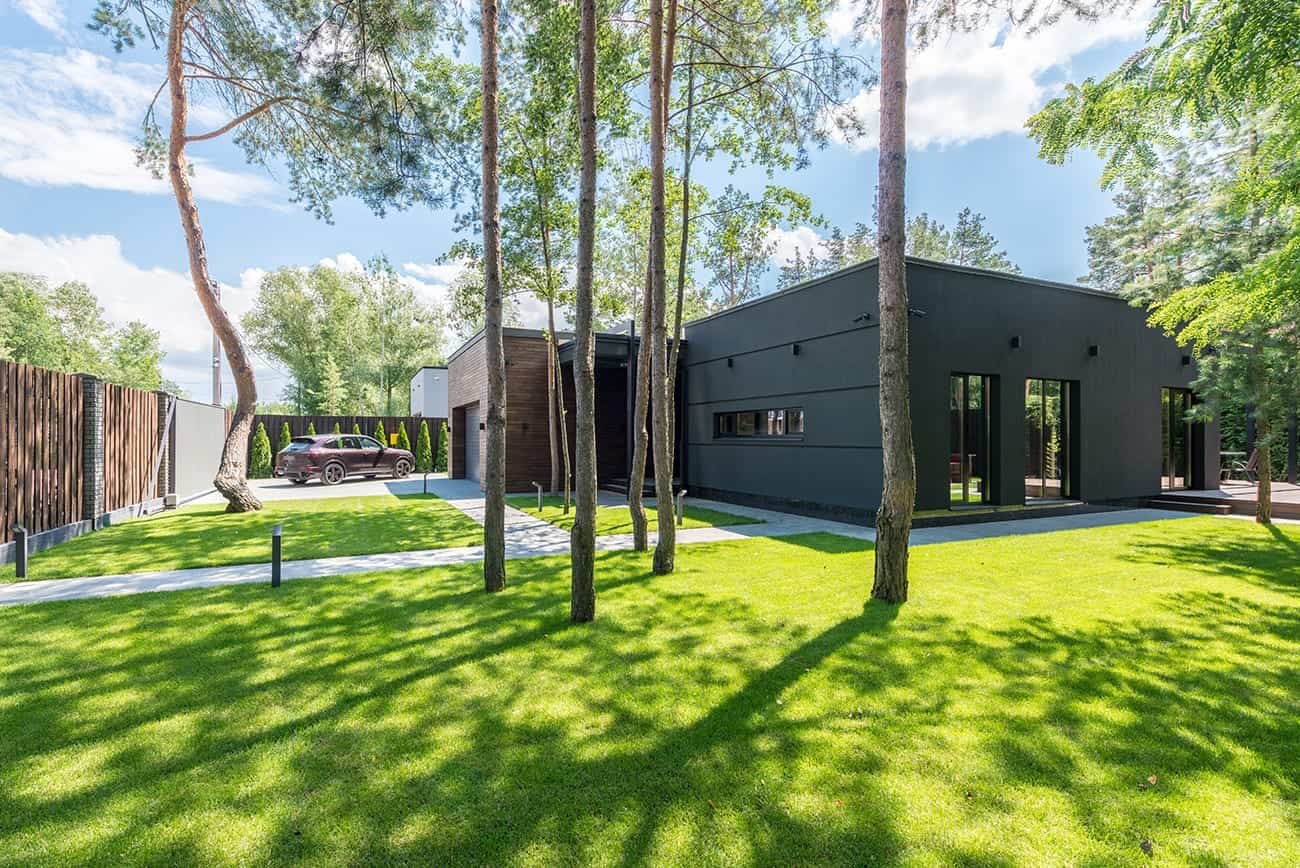
Example image for illustration — not an actual completed Rooted Landscape Co. project.
What Are the City of Las Cruces Watering Rules?
No watering Mondays, assigned days by address, and seasonal time limits — per the City of Las Cruces’ own water conservation program:
| Day | Watering Status |
|---|---|
| Monday | No outdoor watering at all |
| Tuesday, Thursday, Saturday | Even-numbered addresses only |
| Wednesday, Friday, Sunday | Odd-numbered addresses only |
| April 1 – September 30, any allowed day | Before 10 a.m. or after 6 p.m. only |
(Source: City of Las Cruces Water Conservation Program.) The City also runs free “Water Wise Landscaping” workshops and maintains a public demonstration garden of low-water, desert-adapted plants — a genuinely useful, free resource if you want to see mature xeriscape plantings in person before deciding what goes in your own yard.
One thing worth being straightforward about: the City does not currently offer a rebate program for converting turf to xeriscape, unlike some larger cities in the region. That means the financial case for xeriscaping here rests on lower water bills and less ongoing maintenance over time — not an upfront incentive check. It’s still a real case, just not the one some homeowners expect after reading about rebate programs elsewhere in the Southwest.
What Are NMSU’s Seven Principles of Xeriscaping?
Planning/design, efficient irrigation, mulch, soil prep, appropriate turf, water-efficient plants, and appropriate maintenance — New Mexico State University Extension’s seven principles, each mapped to a real decision in a Las Cruces yard:
- Planning and design — dividing the yard into water-use zones (a smaller “oasis” zone near the house that gets more water, a low-water zone further out) instead of watering the whole property the same amount.
- Efficient irrigation — drip and subsurface irrigation instead of overhead sprinklers, which can cut water use by 30-50% for the same plant coverage, while also keeping water off hardscape and out of the wind.
- Mulch — a 2-4 inch layer over planting beds cuts evaporation, keeps soil temperature more stable, and suppresses weeds. See Rock, Gravel & Mulch for the honest comparison between rock and organic mulch.
- Soil preparation — testing and amending soil before planting, which in Las Cruces almost always means dealing with caliche.
- Appropriate turf — using turf only where it earns its water budget, with lower-water turf species where turf makes sense at all.
- Water-efficient plant selection — see the plant list below.
- Appropriate maintenance — xeriscaping reduces water use, it doesn’t eliminate maintenance; irrigation checks, seasonal pruning, and weed control are still part of keeping it looking good.
Which Plants Actually Hold Up for Xeriscaping in Las Cruces?
Creosote bush, soaptree yucca, tarbush, sideoats/black grama, and rabbitbrush — species that grow wild in and around Las Cruces and are recommended specifically for this region by New Mexico State University Extension, rather than a generic “drought-tolerant plants” list pulled from a national gardening site:
- Creosote bush — one of the most drought-adapted shrubs in the Chihuahuan Desert; once established it needs almost no supplemental water.
- Soaptree yucca — a true Southern New Mexico native, tolerant of both the summer heat and winter lows in this zone.
- Tarbush — a low-water native shrub common across the Chihuahuan Desert floor.
- Sideoats grama and black grama — native bunch grasses that establish over a few seasons and can be divided once mature, giving movement and texture without a lawn’s water demand.
- Rabbitbrush — a hardy native shrub, often seen growing along roadsides throughout the area, that tolerates poor soil and minimal water once rooted in.
None of these need to be babied through a Las Cruces summer once they’re established — “established” typically meaning the first one to two growing seasons, when they still need regular watering while their root systems develop.
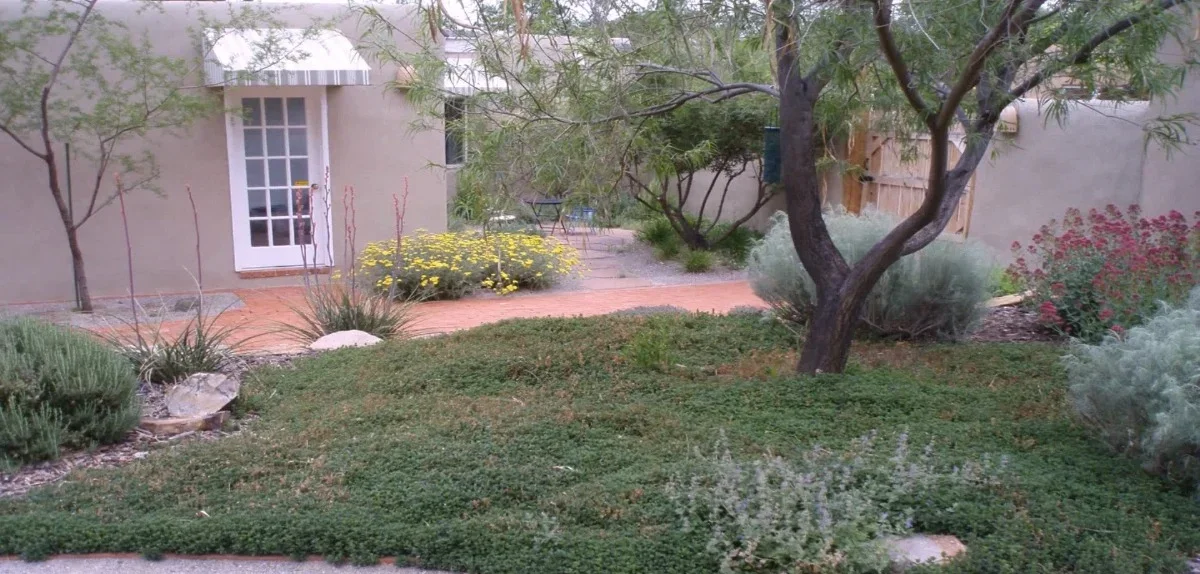
Example image for illustration — not an actual completed Rooted Landscape Co. project.
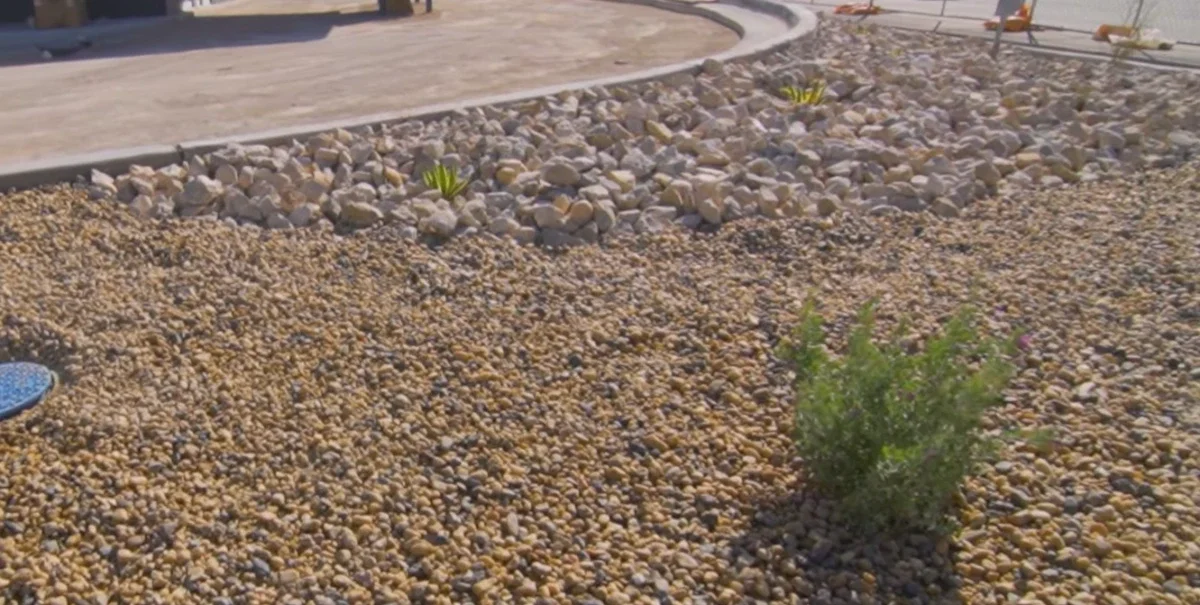
Example image for illustration — not an actual completed Rooted Landscape Co. project.
Why Does Caliche Soil Matter More Than the Plant List?
Because more xeriscape projects fail from what’s under the soil than from what’s planted. Caliche — the hardened, carbonate-cemented layer common across this region — blocks water from draining downward and stops roots from growing deep, according to NMSU Extension.
| What to Check | What It Means |
|---|---|
| Caliche depth | Varies lot to lot — sometimes a few inches down, sometimes considerably deeper |
| Minimum drainage rate | About 1 inch per hour — test any planting hole before putting in real root mass (yucca, tree, substantial shrub) |
Skip that step and even a genuinely drought-adapted, well-chosen native plant can drown in its own hole after a monsoon rain, because the water has nowhere to go.
Frequently Asked Questions
Is xeriscaping just rocks and gravel?
No — that’s a rock yard, not a xeriscape. A real xeriscape design uses zoned irrigation, soil prep, and a real plant palette; rock and mulch play a supporting role (moisture retention, weed suppression), not the whole plan.
Does Las Cruces actually have a water problem?
Yes, in the sense that matters for landscaping decisions: the City actively regulates outdoor watering by day of week and time of day (see the ordinance above), which is a direct signal about local water supply pressure. That’s the practical reason xeriscaping makes more sense here than in a wetter climate, independent of personal preference.
How much does xeriscaping cost in Las Cruces?
It depends on the size of the area being converted, existing turf removal (if any), irrigation changes, and plant selection. Get in touch for a written estimate on your specific yard.
Is there a rebate for converting my lawn to xeriscape in Las Cruces?
Not currently, as of this writing — the City doesn’t run a turf-conversion rebate program the way some other Southwestern cities do. The savings case is in lower ongoing water bills and reduced maintenance, not an upfront incentive.
What’s the best time of year to start a xeriscape conversion?
Fall generally gives new plantings a chance to root before summer heat arrives, though the right timing depends on the specific plants and scope involved.
Related Services
For high-traffic spots where you still want a green, lawn-like surface without the water use, see our artificial turf page. Converting an existing yard rather than starting fresh? See landscape renovation.
That’s the honest picture of xeriscaping in Las Cruces — water-smart, code-compliant, and built around plants that actually belong here.
Written by the crew at Rooted Landscape Co. Xeriscape principles and caliche-soil guidance cited from New Mexico State University Extension. Watering ordinance details cited directly from the City of Las Cruces Water Conservation Program.