
Rock and mulch aren’t just what’s left over after you decide not to plant grass — in a xeriscape-oriented yard, they’re doing real work: holding moisture in the soil, keeping soil temperature more stable, and cutting down on weeds. Installed without a plan, though, rock beds are also where a lot of yards in this area run into the exact same problem a few years in: weeds coming up through the rock anyway, and a bed that looked clean on installation day looking neglected by year two. Getting this right is less about the rock itself and more about what goes underneath it.
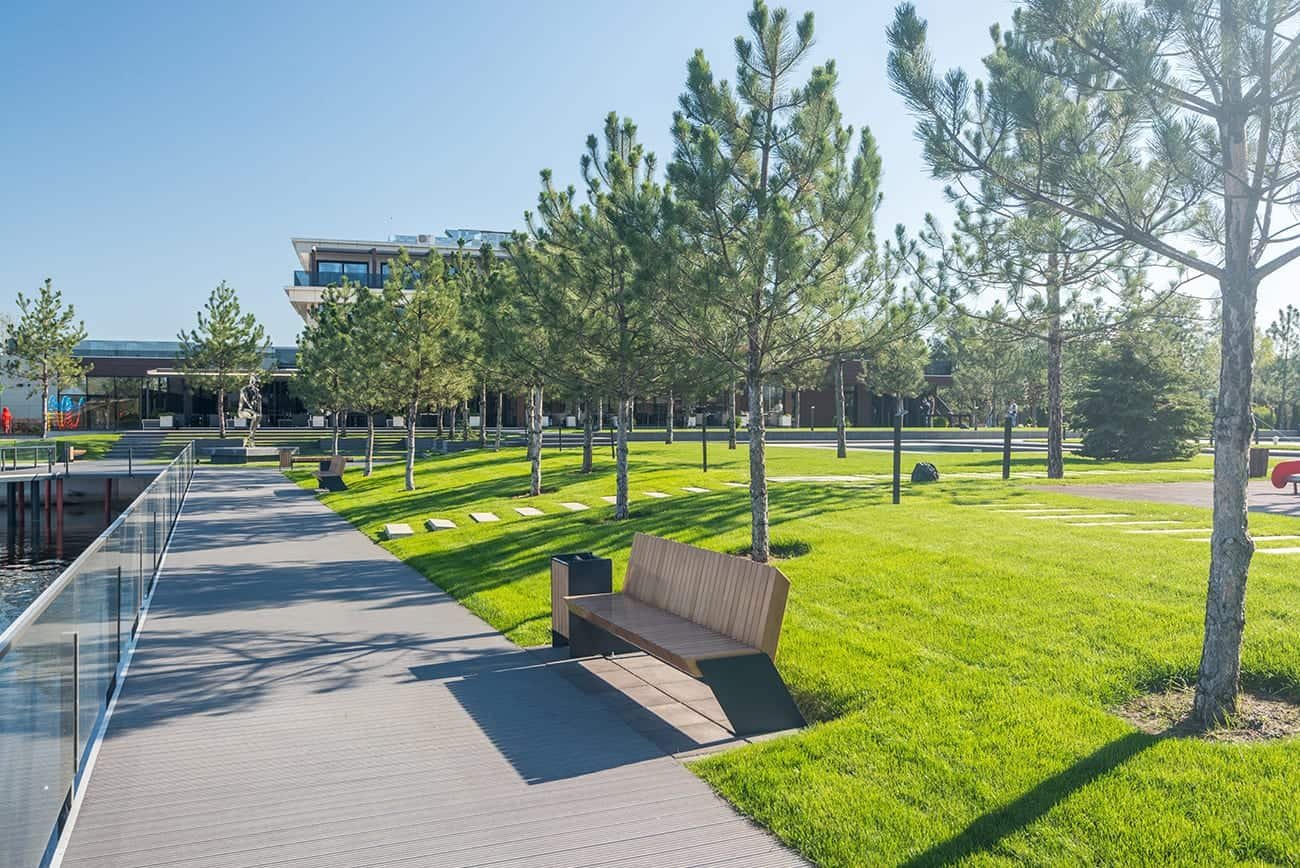
Example image for illustration — not an actual completed Rooted Landscape Co. project.
What’s Included in a Rock or Mulch Installation?
Four core steps: site prep and grading, base and edging, material selection, and mulch for planting beds where relevant.
- Site prep and grading. Rock and gravel beds need the ground graded correctly before anything goes down, so water sheds the way it’s supposed to instead of pooling in low spots — this matters more here than in a wetter climate because when rain does come during monsoon season, it tends to come all at once.
- Base and edging. A proper base layer and clean edging between rock beds, turf, and planting areas is what keeps a rock bed from migrating into the lawn or the driveway over time.
- Material selection. Decorative rock, gravel, and river rock in different sizes and colors, chosen for the specific bed — a walkway edge and a large open bed usually call for different material.
- Mulch for planting beds. Where beds are meant to support plants rather than just cover ground, organic mulch (bark, wood chips) does a different job than rock — see the comparison below.
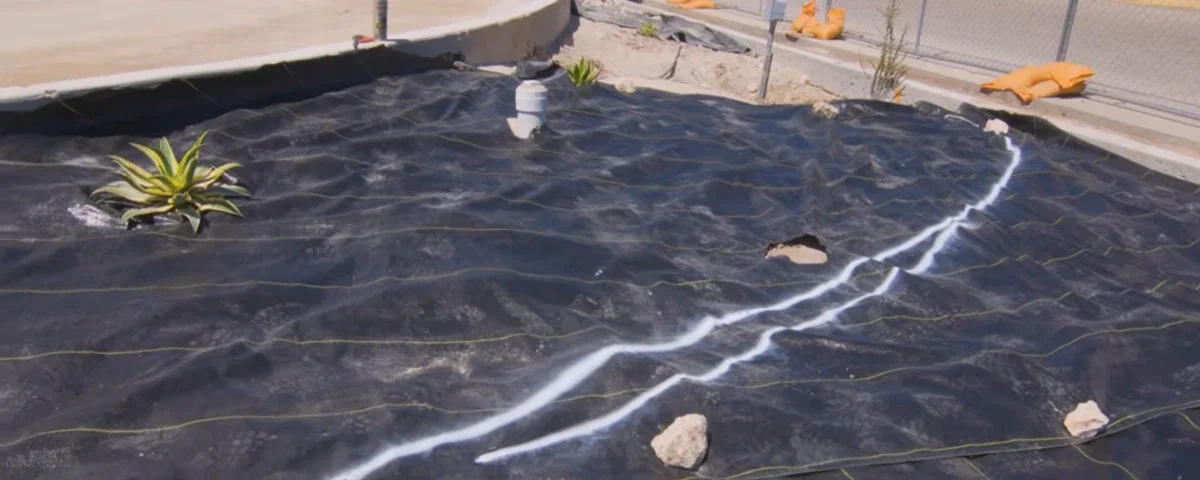
Example image for illustration — not an actual completed Rooted Landscape Co. project.
Does Landscape Fabric Under Rock Actually Work?
It suppresses weeds initially but isn’t a permanent fix — this is a genuinely common point of confusion and a genuinely common point of failure. Over time, wind-blown dust and organic debris settle on top of the rock, and eventually on top of the fabric itself once rock naturally shifts and settles. That accumulated sediment becomes its own thin layer of soil sitting above the fabric — and weed seeds that land in it can root right there, above the barrier, with the fabric doing nothing to stop them. This is exactly how a rock bed that looked weed-free at installation ends up with weeds coming up through it a few years later: the fabric isn’t failing, it’s just not doing the job people assume it does forever.
The practical takeaways: fabric is worth using as one layer of a weed-control plan, not the whole plan. A thicker rock layer, periodic bed maintenance (clearing debris and any rooted weeds before they establish), and choosing the right rock size for the specific location all matter as much as the fabric itself. If a bed is going in around plants that will need root access to soil below, fabric can also work against the design — it’s not the right call for every situation.
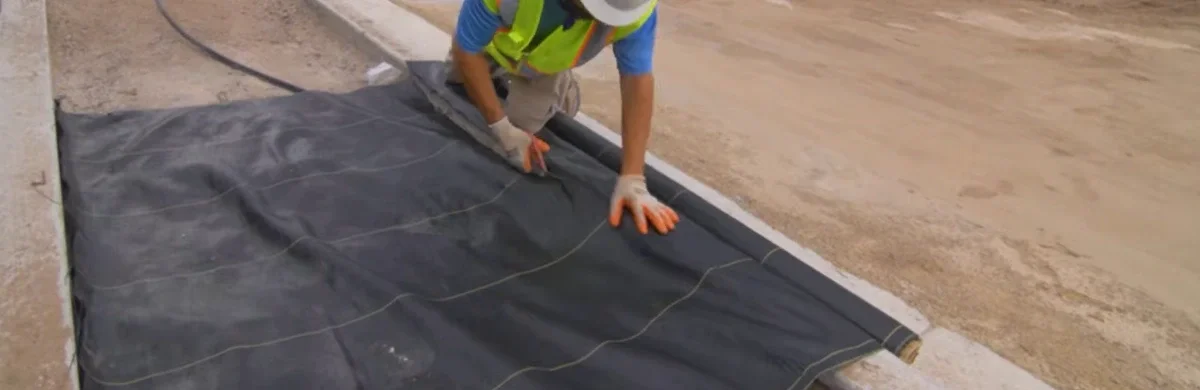
Example image for illustration — not an actual completed Rooted Landscape Co. project.
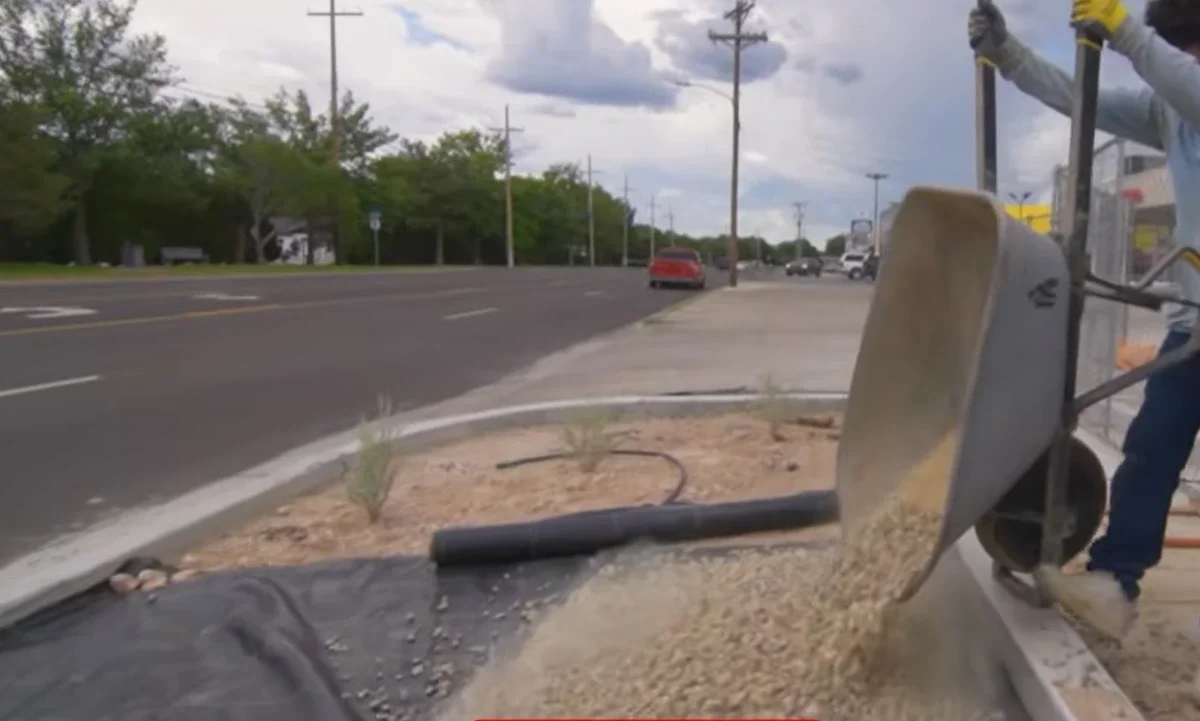
Example image for illustration — not an actual completed Rooted Landscape Co. project.
Should You Use Rock or Organic Mulch in Your Las Cruces Yard?
Both, usually — in different zones of the same yard. They both reduce evaporation and suppress weeds, but behave differently in this climate: New Mexico State University Extension notes rock mulch specifically can increase soil temperature compared to organic mulch.
| Factor | Rock & Gravel | Organic Mulch |
|---|---|---|
| Best for | Pathways, decorative beds, low-maintenance areas | Directly around plants, especially new ones |
| Soil temperature effect | Increases soil temperature (NMSU Extension) | Keeps soil cooler |
| Soil benefit over time | None — purely decorative/functional | Breaks down, adds organic matter — useful in caliche-heavy soil |
A well-designed yard usually uses both, in different zones, rather than picking one material for the entire property.
Frequently Asked Questions
Will landscape fabric stop weeds permanently under my rock bed?
No — it slows weeds initially but isn’t a permanent barrier, since dust and debris eventually build up on top of the rock and give weed seeds somewhere to root above the fabric. Ongoing bed maintenance matters as much as the fabric itself.
What’s the difference between rock and gravel for landscaping?
The terms get used loosely, but generally “gravel” refers to smaller, often rounded material used for pathways or a looser look, while “rock” or “decorative rock” covers larger, more angular material used in beds and borders. The right size and shape depends on the specific area and how it’s used.
How much does rock or gravel installation cost in Las Cruces?
It depends on the material chosen, the square footage, and how much site prep (grading, base, edging) the area needs. Get in touch for a written estimate.
Can I put rock over my existing plants or garden bed?
Not directly around living plants without care — rock can hold heat against stems and change how water reaches roots. It’s worth planning rock placement around, not on top of, an existing bed you want to keep healthy.
Do I need landscape fabric if I’m using rock as decoration around a walkway with no plants nearby?
It can still help there, though the same limitation applies over the long run. For a purely decorative, low-maintenance area, a thicker rock layer plus occasional debris clearing often does more than the fabric alone.
Related: Rock and mulch choices are usually part of a bigger xeriscaping or landscape design plan — and if you’re still deciding between materials, see our Gravel vs. Mulch guide.
Written by the crew at Rooted Landscape Co. Mulch and soil-temperature guidance referenced from New Mexico State University Extension (Guide H707).
Related guides: Firewise landscaping guide