
A renovation starts from a completely different place than a new install: there’s already something here — a lawn that’s given up, rock beds gone weedy, an irrigation system half-working, mature trees worth keeping next to shrubs that never should have gone in this climate. The job isn’t a blank-slate design; it’s figuring out what to keep, what to remove, and what to fix first, in an order that actually makes sense for the property and the budget.
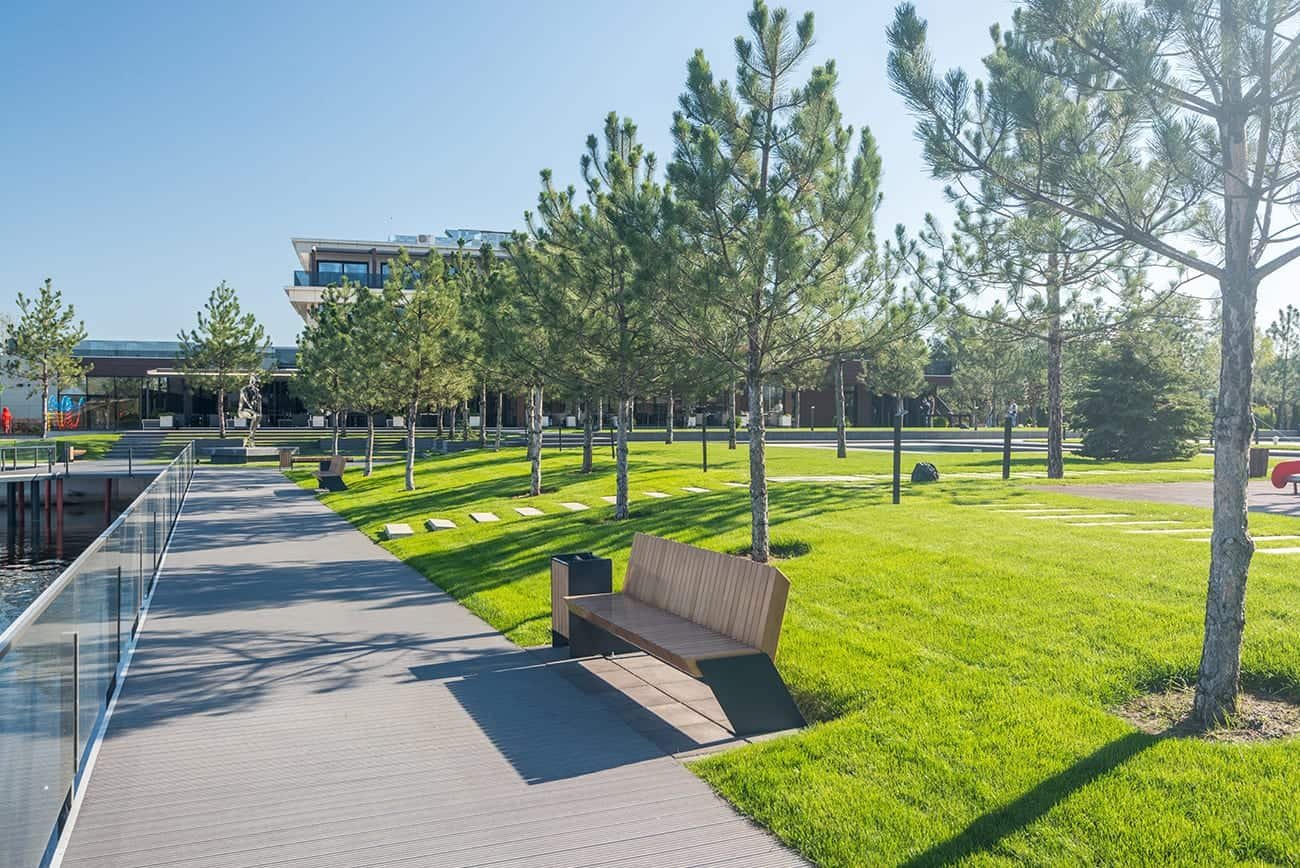
Example image for illustration — not an actual completed Rooted Landscape Co. project.
What’s Included in a Landscape Renovation?
A site assessment of what’s worth keeping, removal of what isn’t working, conversion to xeriscape or turf where it makes sense, and irrigation/drainage correction.
- Site assessment of what’s already there. Before anything gets removed, we walk the property and note what’s actually worth keeping — a mature, well-placed tree is a real asset that takes years to replace, even if everything around it needs to go.
- Removal of what isn’t working. Struggling turf, overgrown or dead shrubs, cracked or shifting hardscape, and rock beds too weedy to salvage get cleared as part of the plan, not left for you to deal with separately.
- Conversion where it makes sense. A lot of renovations in this climate mean converting some or all of a water-hungry lawn to xeriscaping — see our xeriscaping page — or replacing worn turf with artificial turf in high-traffic spots.
- Irrigation and drainage correction. An older system built for a different landscape layout often needs rework, not just repair, once the planting plan changes. See irrigation and drainage & grading.
Do You Have to Renovate the Whole Yard at Once?
No, and for most budgets we’d actually recommend against it. Phasing a renovation — front yard this year, backyard next, or worst-performing section first — is a completely legitimate way to spread the cost, and it lets you see how the first phase performs before committing to the rest. We’ll say plainly if a phased approach makes more sense for your situation than doing it all in one pass, rather than pushing for the larger job by default.
Renovation vs. Starting Over — How Do You Tell Which You Need?
Most properties don’t need a full teardown — renovation fits when the bones are reasonable and some plants or hardscape are worth keeping.
| Approach | Fits When… |
|---|---|
| Renovation | Grading is roughly right and some plants/hardscape are worth keeping, but the yard has drifted into disrepair |
| Full rebuild | Drainage is fundamentally wrong or irrigation infrastructure is beyond repair |
We’ll tell you honestly which situation yours is during the site visit — a renovation quote that’s secretly a full teardown in disguise doesn’t do you any favors.
Frequently Asked Questions
Can you keep my mature trees during a renovation?
In most cases, yes — a healthy, well-placed mature tree is exactly the kind of asset we plan around rather than remove, unless it’s actively damaging hardscape or structures.
How long does a full landscape renovation take?
It depends heavily on scope — a single-zone conversion is very different from a full front-and-back overhaul. We’ll give you a real timeline once we’ve assessed the property.
Does renovating my lawn into xeriscaping actually save money long-term?
Generally yes, through lower water bills and less ongoing maintenance, though the upfront conversion cost varies by size and materials. See our xeriscaping vs. traditional lawn guide for the fuller cost picture.
What does a landscape renovation cost in Las Cruces?
It depends on what’s being removed, what’s being kept, and the scope of the new plan. Get in touch for a written estimate.
Do you handle the removal and disposal of old landscaping material?
Yes — removal and haul-away of what’s coming out is part of the renovation process, not a separate line item you have to arrange yourself.
Nearby Areas We Also Serve
See the full list on Areas We Serve.
Get in touch to schedule a site visit.
Written by the crew at Rooted Landscape Co.